Hard drive partitioning is a common issue discussed in many tech forums. In a thread on Apple’s support forum, users complain that their Mac Disk Utility partition grayed-out while trying to partition their external hard drives. Probably, you just bought your external hard drive and are eager to use it on your Mac. Make sure your Mac is connected to the external storage device (for example, using a USB cable or over a network). Click the Finder icon in the Dock to open a Finder window, then do one of the following to move your files. Move files to the storage device: Select one or more files on the desktop or in a folder, then drag them to the storage device, listed below Locations in the Finder sidebar.
Backing up your iPhone is a smart move because it can protect you if you lose your iPhone or if it becomes damaged at some point. Although Apple’s own iCloud backup service is great, it means putting all of your data under the control of Apple (see our iCloud review).
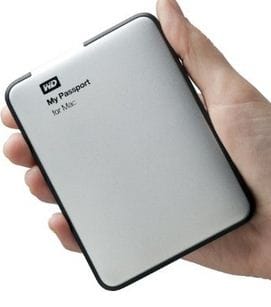
If that doesn’t sound appealing to you, or you’re running out of iCloud storage space, then you’ll want to learn how to backup an iPhone to an external hard drive. This involves moving your previously hidden iPhone backup files from your Windows PC or Mac to an external hard drive.
You’ll need an external hard drive with enough storage to be able to do the job, so look at investing in one of the best external hard drive options before you consider backing up your iPhone files.
How to Backup an iPhone to an External Hard Drive
It’s been a while since it was necessary to backup your iPhone using your PC or Mac. Thanks to the magic of iCloud, you’re able to make backups of your iPhone data without needing any other equipment.
This has its advantages, not the least of which is being able to make regular backups without plugging in your iPhone. The biggest problem with this approach, however, is storage. Backing up to iCloud uses your limited iCloud storage. The larger the backup files, the less space you have for essentials, including your camera photos, although you may wish to move your photo collection to the best online storage for photos instead.
That’s why backing up to an external hard drive can be a better method. It’s more involved and does require you to revert to old-school iPhone backups using iTunes or, if you’re using macOS Catalina, you can use Finder instead.
If you have made a backup of your iPhone using your PC or Mac, you can then move the files to an external drive.
How to Backup an iPhone to an External Hard Drive on Windows
To begin backing up an iPhone to an external hard drive on Windows, you’ll need to have iTunes installed. Connect your iPhone to your PC and open iTunes once it’s installed.
Once your iPhone is connected to your PC, unlock your iPhone and pressed “trust” on it to allow your PC to connect. Then your iPhone should appear under the “devices” tab in the left-hand menu of iTunes.
Click the iPhone icon in the top left of the iTunes screen. This is located next to the media dropdown menu (i.e. “music”). This brings up the device information menu for your iPhone.
To perform a manual backup of your iPhone to your PC, click “back up now” under the “manually back up and restore” section.
Your iPhone will take some time to finish backing up to your PC. Once it’s completed, you’ll have to manually copy the backup files to your external drive.
The location of iPhone backup files is C:UsersusernameAppDataRoamingApple ComputerMobileSyncBackup, replacing “username” with your own Windows username. You can also type “%appdata%Apple ComputerMobileSyncBackup” in Windows File Explorer to take you directly to the folder.
Using the “date modified” column, locate the newest backup for your device. Right-click on the folder and press “copy.” You can then attach your external hard drive, open it in File Explorer, right-click and “paste” the backup folder to an appropriate location. You’ll need to do this every time you perform a manual backup of your iPhone to your PC.
How to Backup an iPhone to an External Hard Drive on Windows
- Open iTunes and connect your iPhone.
- Click the device icon in the top left, then click “back up now.”
- Once the process is complete, go to the iTunes backup folder (“%appdata%Apple ComputerMobileSyncBackup”).
- Locate the latest backup folder, right-click, press “copy” and then paste it to your external hard drive.
How to Backup an iPhone to an External Hard Drive on Mac
The process for backing up an iPhone to an external hard drive on Mac is pretty similar for users with macOS Mojave or older operating systems that, like Windows, use iTunes for iPhone backups. If you use a Mac with macOS Catalina, the process differs, using Finder instead.
If you have macOS Mojave or older, connect your iPhone and open iTunes. Click the iPhone device icon in the top left. If your Mac device is running macOS Catalina, open Finder from the app dock at the bottom of your screen instead.
Click “back up now” in the “manually back up and restore” section of your device information menu. For Catalina users, the “back up now” button is listed under the “backups” section.
This process will take some time to complete, especially if it is the first time your device has been backed up. Once it has, you can begin copying your files to an external drive.
Whether you’re using iTunes or Finder, the typical location for your iPhone backup files is “~/Library/Application Support/MobileSync” — which won’t appear in Finder. Click the search icon in the top right of your Mac screen and type in your backup folder location. Locate the most recent backup folder, right-click and then click “copy.”
Head to your external drive listed under “locations” in your Finder left-hand menu and paste your backup folder there.
As with Windows, you’ll need to do this whenever you perform a manual backup of your iPhone to Mac.
How to Backup an iPhone to an External Hard Drive on Mac
- Connect your iPhone to your Mac. Macs running macOS Mojave or older should open iTunes. Macs with macOS Catalina should open Finder.
- Click the iPhone in the top left (iTunes) or your device name under “locations” (Finder), then click “back up now” to begin a manual backup.
- Click the search icon in the top right of your Mac screen, locate “~/Library/Application Support/MobileSync” and double-click on the folder to open it in Finder.
- Right-click the most recent update folder, click “copy,” then paste it to your external hard drive.
Final Thoughts
Although it isn’t a straightforward process, backing up an iPhone to an external hard drive can give you control over your iPhone backups. It can also help you reclaim iCloud storage or move your iPhone backups to a cloud backup service like Carbonite in the long run (see our Carbonite review).
Depending on the size of your iPhone storage, making regular backups will require a large enough external hard drive. A 1TB storage device is the minimum size we’d recommend, so be sure to take a look at our best 1TB external hard drive shortlist for options. If you’re worried about Mac support, take a look at our review of the best external hard drive for Mac.
Do you prefer to manually backup your iPhone? Share your iPhone backup tips and tricks in the comments below. Thanks for reading.
BestExternal Hard Drives for MaciMore2020
We understand that your data is important to you. Whether its personal documents, important work files, or just making sure you have everything you need to be backed up, you can never be too safe. External hard drives are not only useful for storing data but are an excellent way to transport files from one location to another. When you take into account price, ease of use, and portability, the Seagate Backup Plus Slim is the most reliable hard drive you can carry around with you at all times.
Best Overall: Seagate Backup Plus Slim (2 TB)
If you want a reliable external hard drive that has a decent amount of storage, is super easy to carry around and has a very affordable price tag, the Seagate Backup Plus Slim is the best option for most people. Formatted for Windows and Mac right out of the box, it's easy to carry all your essential documents from desktop to laptop without missing a beat.
The Seagate Dashboard back up system is a fantastic simple tool that can let you schedule backups to ensure you never miss any critical files you need in case something terrible happens to your computer. You can set automatic backups daily, weekly, or monthly, and change the frequency whenever you want.
Seagate also throws in a one-year complimentary subscription to Mylio Create. This can help you wrangle your photo library if you don't already use some photo managing tool, and a two-month membership to Adobe Creative Cloud Photography Plan.
Pros:
- Affordable
- Great backup software
- USB 3.0
- Metal enclosure
Best Overall
Seagate Backup Plus Slim (2 TB)
Reliable, portable, and affordable.
No lengthy setups or formatting procedures, the Seagate Backup Plus Slim 2TB is formatted for Mac right out of the packaging.
After the firmware is updated, you can stop the TFTP server. Open the TFTP v3.4.1 application; In the TftpServer window, click Stop to disable the TFTP server if the TFTP server if no longer needed; Manual configuration of TFTP server in Mac OS X: Using TFTP Server on Mac OS X 10.7 Lion and later versions for firmware updates. Tftp server for macbook pro.
Best USB-C hard drive: Samsung T5 Portable SSD (1 TB)
This small compact SSD drive from Samsung comes with both a USB-C to USB-C cable and a USB-C to USB-A, meaning it's perfect to use with your MacBook or Mac.
Its fast 540 MB/s read and write speeds are more than enough to transfer any file. And should be able to store all your photo and video files with ease thanks to its straightforward software. Plus, if you're worried about encryption, the Samsung T5 Portable SSD has you covered with an optional password to launch the drive and AES 256-bit hardware encryption on all your files.
Pros:
- USB-C
- SSD
- Super compact
- AES 256-bit hardware encryption
Best USB-C
Samsung T5 Portable SSD (1 TB)
Fast and encrypted
With 540 MB/s read and write speeds, the Samsung T5 Portable SSD is fast enough for photographers and videographers to transport all their work.
Source: Western Digital
Compatible with Time Machine right out of the box, the 8 TB storage capacity on the Western Digital My Book is perfect for people looking for a lot of stage at a reasonable price. It's USB 3.0, meaning it's easy to take advantage of its storage speed with fast transfer speeds.
While portability is not the Western Digital My Book's strong suit and it needs a separate power source, it does offer 256-AES encryption when you download its easy-to-use security software. It ensures all your important files and documents stay private.
If you're looking for a drive that has lots of space, os you don't have to have multiple as your storage needs grow, look no further.
Pros:
- Lots of storage
- 256-AES encryption
- Time Machine compatible
Best Capacity
Western Digital My Book (8TB)
Lots of storage for those who need it
Western Digital offers 256-AES encryption when you download its security software, meaning you can rest easy knowing your private information and personal data is safe.
Best Thunderbolt 3 Drive: LaCie Rugged Thunderbolt
LaCie hard drives have always been good for people on the go because of the rugged design. The LaCie Rugged Thunderbolt can withstand some dust, dirt, and even a tiny bit of water being splashed on it.
It's 7200 RPM Hard drive keeps things running smoothly. And the included USB-C cable — which supports Thunderbolt 3 — makes it perfect for MacBook and Mac users alike!
Cons:
- Only 130MB/s
Best Thunderbolt 3 Drive
LaCie Rugged Thunderbolt
Rugged design with Thunderbolt 3
The LaCie Rugged Thunderbolt 3 is a favorite because it can withstand drops, dust, and even the occasional splash of water, making it easy to carry around!
Best for Legacy Hardware : G-Technology G-DRIVE USB 3.0 (4TB)
While Apple has been going the way of USB-C and Thunderbolt 3 for a while now, some of us still use older hardware and thus don't need hard drives that have USB-C connections. If you're still rocking USB-A or even a Thunderbolt 2 connection from your Mac, the G-Technology G-DRIVE USB 3.0 (4TB) is a perfect companion.
Its all-metal design is not only more durable than plastic hard drives, but it also looks stylish! Plus, it's 7200 RPM speed allows the G-Technology G-DRIVE USB 3.0 to achieve 195 MB/s read and write speeds. This makes it fast enough to transfer large video files quickly and efficiently.
Cons:
Cnet Best External Hard Drive
- Needs to be reformatted for Windows
Best for legacy hardware
G-Technology G-DRIVE USB 3.0 (4TB)
Stylish and fast even on older computers
With 7200 RPM, this hard drive works hard and fast to get your files transferred quickly. Plus, it uses USB 3.0, and it even has a Thunderbolt 2 port.
Best External Hard Drive For Mac Catalina Bay
Source: CalDigit
APA Format Styles Are a Snap with Reference Point Software. With just a few clicks of the mouse, your document will have the proper margins, with the header and page numbers at exactly the right place for any APA format style paper. Even references and citations are a breeze. Apa Style Mac Software ScholarWord for the APA Style v.2.0 With easy reference formatting tools and comprehensive writing guides for the APA style, the ScholarWord APA has everything you need to write elegant papers that are fully compliant with the 5th edition of the APA Publication Manual. PERRLA for Word works directly with Microsoft Word to handle every part of APA & MLA formatting for you. Available for Windows & Mac. PERRLA Online lets you write your papers from anywhere with our web-based editor. Then, download them as Word documents to turn in. Learn How PERRLA Works. Apa format software for mac catalina.
The CalDigit Tuff does the best it can to live up to its name, giving you a hard drive that isn't as delicate as most. Its official IP rating is IP57, meaning it can be submerged in 3-feet of water for 30 mins and come out the other side functional. That's not all; this Thunderbolt 3 compatible drive can also withstand falling from about 4-feet high. We still don't suggest that you purposely abuse the CalDigit Tuff. Still, it's always good to have peace of mind when you're carrying your hard drive around.
Cons:
- Only come in 2TB
Best rugged drive

CalDigit Tuff
Can withstand drops and water
Official rated IP57, the CalDigit Tuff can survive an accidental dip into the water and has a great price tag.
Source: Samsung
If you're used to dealing with giant file sizes and need a hard drive that can handle transfer data fast, the Samsung X5 is one of the fastest SSD's you'll find. Its read and write speeds are 2,800MB/s and 2,300MB/s, respectively, and the entire body is made of metal, making it much harder than plastic drives. Plus, The internal frame on the inside is shock resistant for drops from 2 meters.
This SSD comes with Thunderbolt 3 technology included. This you can take advantage of the fast speeds on your Mac or MacBook Pro, and it doesn't need any formatting, so it's plug and play!
Pros:
- 2,800MB/s read speed
- Shock resistant
- Thunderbolt 3
Best fast drive
Samsung X5
Incredibly fast SSD
If you need blazing fast speeds for giant files, the Samsung X5 is a monster external SSD that can handle any workload.
Bottom line
The Seagate Backup Plus Slim is the most reliable hard drive you can carry around with you at all times. It is formatted for both Mac and Windows right out of the box, and its easy-to-use software can automatically do backups for you as often or as little as you want.
Seagate also throws in a one-year complimentary subscription to Mylio Create. This program can help you wrangle your photo library if you don't already use some photo managing tool. A two-month membership to Adobe's Creative Cloud Photography Plan means it's perfect for budding photographers as well.
Credits — The team that worked on this guide
Luke Filipowicz is an iMore staff writer who has been carrying around his Seagate Backup Plus Slim since his college days.
Lory Gil is the Managing Editor of iMore and an avid believer in having as many backups of your important files and documents as possible.
Rene Ritchie is the foremost authority on all things Apple and has insider knowledge about the goings-on at the biggest tech company in the world. When it comes to accessories for Mac, Rene has used them all.
We may earn a commission for purchases using our links. Learn more.
Buyers GuideGet the most out of your iMac with these nifty accessories
Your all-in-one iMac is a feat of engineering, but unless you accessorize it properly, it’s just a big TV on your desk. You’ll need a kick-ass mouse, a great keyboard, some sweet speakers, and more.