After years of mountain-inspired operating systems, macOS Mojave feels like a catch of fresh air for Apple. Who wouldn’t be tempted to lay hands on its gorgeous Dark Mode? But as it often happens with new products, you should be aware of glitches, bugs, and all kinds of compatibility paradoxes. There are a few already known macOS Mojave problems that we will cover in this article.
- Macos Zoom Audio Issue Asking For Password Windows 7
- Macos Zoom Audio Issue Asking For Password On Iphone
- Macos Zoom Audio Issue Asking For Password On Mac
Before September 2018 macOS Mojave was only available as a Beta via Apple developer account. It's been 7 months since it went public but if you want to get early access to future OS updates, you might consider becoming an Apple Developer. This privileged club costs $99 per year to join and in exchange, you'll be the first to lay your hands on Apple’s fresh releases.
You are asking how to zoom webcam for Mac. If you need to zoom the camera please refer to the below information. Click on the 'Apple' icon and then go to preferences. Then click on 'white and blue arrow' symbol. Click on 'seeing' and select 'zoom on' option. Then exit from the window. In time of using the webcam to hold down 'option' key. Jul 15, 2019 The first and third issues should be fixed by updating to Zoom client version 4.4.2 on macOS (the software is also re-branded by RingCentral, in which case it’s version 7.0.1).
Update 7/16: Apple has issued two more silent updates to macOS that address other apps that may be using Zoom's localhost server. Apple is taking further action to shut down Zoom servers that may.
List of most common Mojave problems
Zoom, the cloud meeting company, unifies cloud video conferencing, simple online meetings, and group messaging into one easy-to-use platform.Take advantage of a complete solution that includes video, audio, and screen-sharing experience across ZoomPresence, Windows, Mac. Nov 15, 2019 But, many users report Zoom meeting issues, including not being able to hear audio or see video. The reason for your Zoom meeting issues is most likely a poor connection to the Internet. So, solving the problem means getting a fast, stable and secure connection. Jun 23, 2020 Addresses an issue that may prevent password entry on the login screen Fixes an issue where System Preferences would continue to show a notification badge even after installing an update Resolves an issue where the built-in camera may not be detected when trying to use it after using a video conferencing app. While Zoom responded to the issue and said it was working on a fix, with an update planned to be released soon, it looks like Apple has decided to take things into its own hands. As reported by TechCrunch, Apple has issued a silent update to macOS, which Apple has confirmed, that removes the web server.

Here is the list of most common Mojave issues that have been reported so far.
1. macOS Mojave install stuck
Is your Mac compatible with macOS Mojave?
One of the most reported macOS Mojave problems is a Mac getting stuck in the middle of the Mojave installation. A simple explanation — your Mac is just not technically fit to run Mojave. According to Apple, macOS 10.14 can be launched only on Macs not older than from 2012. If yours was released earlier — sorry, you’ll have to miss this update.
Below is the list of Mac models compatible with Mojave:
- MacBook (Early 2015 or higher)
- MacBook Air (Mid 2012 or higher)
- MacBook Pro (Mid 2012 or higher)
- Mac Mini (Late 2012 or higher)
- iMac (Late 2012 or higher)
- iMac Pro (2017)
- Mac Pro (Late 2013, mid 2010, mid 2012 models)
Try reinstalling macOS Mojave from scratch
Okay, let’s assume your Mac is fully compatible with macOS Mojave. But still you get something like 'Installation of macOS could not continue' on your screen. What’s causing the installation trouble then? If your Mojave update stuck or ends abruptly, you should go back to square one and do it properly this time around. The recommended procedure requires backing your Mac up and cleaning your Mac from “old baggage” that may interfere with the macOS update.
Step 1. Clean up your Mac from system junk
As a general rule, a fresh macOS requires a fresh hard drive. There are tons of outdated caches, app leftovers, plugins, and system logs on any given Mac. Not only they take a lot of space but may also be causing various kernel-level errors. To clear them away, use a dedicated Mac cleanup app — you’ll be able to delete hidden junk that you otherwise can’t access. Among many alternatives, the simpler solution is CleanMyMac X, which has proved quite effective in cleaning my MacBook Pro (15-inch, 512 GB).
- Download CleanMyMac for free from developer’s site.
- Click Smart Scan.
- Remove hidden junk from all the suggested folders.
Now your Mac is ready to install macOS Mojave on top of your current OS. What’s left is to prepare the data backup in case something goes wrong.
Step 2. Back up your Mac
- Connect external drive and launch Time Machine.
- Switch Time Machine to “On” position.
- Choose external drive as a backup path.
- Click “Backup Now.”
Step 3. Reinstall macOS Mojave
Now, delete the previously downloaded macOS Mojave installation (find it in your Downloads) and restart your computer. Next up, re-download the installation file from your Apple Developer Account or from the Mac App Store.
What else you might try?
You have downloaded the macOS Mojave and still cannot go past “Preparing the installation…” window. Let’s admit, new macOS versions are often buggy and problematic but here are a few more ideas to try.
Start your Mac in Recovery Mode. To enter Recovery Mode on Mojave, Click Apple logo > Restart. Right after that hold down Command + R buttons while your Mac is restarting. While in Recovery Mode you’ll be able to run Disk Utility to check your disk for consistency.
Disable your antivirus software if you have any installed. Sometimes such apps would block any new installation attempts — a classic case of overprotection.
2. Can’t install the Mojave on an external drive
Some folks have reported they have ran into trouble trying to install macOS Mojave onto an external SSD drive. The installation would abort midway and eventually drop you back into High Sierra. As some bloggers have pointed out, the issue is caused by a USB-C adaptor connected to MacBook.
The solution suggested on Mac forums would be to connect the SSD via Thunderbolt 3 port. If you haven’t got a similar dock available, but your external drive has a Thunderbolt 1 or 2 port, try connecting it direct using a Thunderbolt 3 to 2 adaptor. Hopefully, this time it should work.
One more suggestion is to go the radical way and perform a clean install of macOS 10.13 High Sierra and then go a one step up to macOS Mojave.
3. iCloud is not syncing properly
The first editions of macOS 10.14 Mojave seemed to be lacking some basic iCloud features which will likely be added in the next updates. One of those missing bits is Back to My Mac functionality (remote access to files and screen sharing). But the most annoying setback is iCloud not syncing properly.
How to fix it? First, sign out from the iCloud account and sign in back again.
- Select Apple icon > System Preferences.
- Select iCloud > Sign Out.
Then, similarly, log in back to your account. If that doesn’t resolve the syncing issue, delete the iCloud-linked folder “Cloud Docs” in the Finder. This will cause your Mac to download iCloud drive files and re-establish the connection.
- Click on Finder > Go > Go to folder… (in the upper menu).
- Find the CloudDocs folder and delete it.
In addition to that you’d want to stop a couple of iCloud-related process in Activity Monitor. This will reboot iCloud syncing from the ground up.
- Go to LaunchPad > Activity Monitor.
- Type “cloudd” in the search bar above.
- Click on big [x] Quit button.
Repeat the same steps for “bird” process.
Since iMessages syncing has been added to macOS Mojave (cool!) this too may not work properly after the update. To fix it, you must apply the ancient “switch it off and on again” principle that works equally well for your home appliances. Simply disable and then re-enable iMessages syncing via iCloud to get it going like it should
4. Bluetooth issues on macOS Mojave
Bluetooth connection not working on macOS 10.14 Mojave is a known issue too. The symptoms look like your Mac just wouldn’t connect to Bluetooth, or in some cases, refuse to turn itself off.
To address this injustice, it’s recommended to delete the Bluetooth plist file — don’t worry it will recreate itself upon the next Bluetooth launch. But just in case, copy the file to some safe location.
- Click on Finder > Go to Folder…
- Type in /Library/Preferences.
- Find com.apple.Bluetooth.plist file and delete it.
- Restart your Mac.
5. macOS Mojave crashing at login
This macOS Mojave problem is quite typical. With every new macOS you can always expect some degree of mis-coordination between the OS and Apple default apps. The same refers to your third-party apps that launch automatically upon startup — they may not even be yet supported in the current version of macOS Mojave. As a result, you see your MacBook running slow after the Mojave update. What you can do is this:
Disable the unwanted Login Items
So how can you fix macOS Mojave crashing at login? Luckily, this issue is nicely tackled with the previously mentioned CleanMyMac X. It allows you to remove Login Items one by one so you can see which app was causing the macOS to crash. Disabling Login items with CleanMyMac at first may seem like an extra step but it’s worth it.
- Download CleanMyMac tool — a free download from developer’s site
- In the sidebar, find Optimization > Login items
- Disable potentially problematic Login Items
Using the same tool you can also trim down the so-called Launch Agents or Daemons. These are small helper applications that run in the background and extend the functionality of the main app, like Skype. Once again, your logic is to switch off one app at a time to see if fixes the problem.
Delete specific plist files in Preferences
A user on MacRumors forum suggested another possible solution. This annoying macOS Mojave problem can be fixed by removing the potentially corrupted property list (plist) files in Preferences. These files contain individual user settings for various parts of the macOS (Finder, Desktop, Applications). Resetting them may be just the solution you need. To proceed, you will need to start your Mac in the Safe Mode.
To enter Safe Mode, hold down Shift when your Mac is booting up. Let go of the Shift key when you see Apple logo appearing on the screen.
1. Click Finder > Go > Go to Folder…
2. Paste in: ~/Library/Preferences/
Note: copy this entire folder
3. Delete plist files for Finder or Desktop.
Restart your computer to see if that fixed the issue. If not, the optimal solution would be to revert to macOS High Sierra and wait for the next macOS Mojave updates from Apple. To go back to your previous macOS, install it from Time Machine backup that we are sure you had meticulously prepared.
6. Mac running slow after Mojave update
So you’ve successfully installed macOS 10.14 Mojave to find out that your Mac’s performance got worse. This maybe not a Mojave-specific issue, though. Normally, people judge the efficiency of their Mac by looking at speed of their most-used apps. If your Mac hangs while you’re using Skype, for example, this may be due to Skype conflicting with the Mojave, thus a completely an app-related problem. But, anyway, it’s a good idea to do a basic health check of your system.
Fixes for a slow performance on Mojave:
1. Clean up your Desktop
Remember, every desktop icon takes up RAM space. Fewer icons — the faster your Mac gets. When your Desktop is clean, restart your computer. Newly-introduced 'Desktop Stacks' feature on macOS Mojave lets you put those icons in order.
2. Update all your apps to their latest versions
As you’re reading this, macOS developers around the world are adjusting their apps before to macOS Mojave before it goes public. Update everything to the last version available — some apps have already been fixed.
3. Check your Activity Monitor
Go to Launchpad > Activity monitor. Quit apps and processes that take up the unfair amount of memory.
4. Remove system junk and app cache
Outdated cache files, redundant support files, and logs generated by all your apps can slow even a powerful Mac down to a crawl. Remember how fast and efficient your Mac was straight from the store? You can partially restore this original power by cleaning up your Mac from top to bottom, or from Finder to Library, if you like. CleanMyMac X is a great app that can clean all sort of junk and clutter from your hard drive.
Things that deserve being removed:
- System junk
- App caches
- Unused apps
- Old iOS updates
- Extra localizations
You can download a free CleanMyMac version here. It cleans all the items described above.
7. Quit apps keep showing in the Dock
The latest update to macOS Mojave introduced a new feature that leaves many of us, Apple fans, disappointed. Now the default behaviour of macOS Mojave is to show you 3 most recently used applications in the Dock. So if you have just quit an app and it still shows up in the Dock, it’s not a bug but a feature. Luckily, an easy reversible one.
- Go to System Preferences > Dock.
- Untick “Show recent applications in Dock.”
After all, the Dock is a customizable corner of the macOS and it should be left to the user to decide what to put in there.
8. Third-party apps not working on macOS Mojave
The main problem here is 32-bit/62-bit distinction. Apple stated that macOS High Sierra is the last operating system to support 32-bit optimized applications. From then on, if an app isn’t updated for 64-bit architecture, you won’t be able to use it on Mojave. This is one of the reasons not to update and stay with the good old High Sierra on your Mac.
How to find apps that are not Mojave-compatible?
Before you upgrade to macOS Mojave, check for compatibility issues. Here's how to do that:
- Click on Apple logo > About this Mac.
- Click on System report > Applications.
Now, look for the last column 64- bit in the window that opens. “Yes” indicates that the app in question is ready to run on macOS Mojave. Sadly enough, even some of Apple’s native 32-bit apps will not be supported on macOS Mojave. This includes Aperture, old version of iWork, and old version of Final Cut Studio.
Other notable 32-bit apps are Microsoft Office’s Powerpoint 2011, Outlook 2011, Word 2011, Excel 2011. The adequate answer to that is to update these apps to newer versions. Or you could also:
- Run macOS Mojave alongside macOS High Sierra, with Parallels
- Not to update to macOS Mojave
- Reach out to app’s developer and ask them for advice
- Consider transitioning to a different app
How to check 32-bit apps on macOS Mojave
However, if you've already upgraded to the new OS and need to check the incompatible software, you have to follow a bit different steps than mentioned above. In Mojave, 32-bit apps can be reviewed in System Information:
- Click on Apple logo > About This Mac.
- Click on System Report.
- Choose Software > Legacy Software.
That's how you can get an overview of 32-bit apps on your Mac if Mojave is installed on your Mac. Developers are highly encouraged to migrate to 64-bit framework but it will take some time. So, if you need to remove the incompatible apps from your system, check a few tips below.
An app is 'not optimized for your Mac and needs to be updated'
When you see this rather discouraging message you may simply want to uninstall the app — a radical solution to the problem. To make things easier, the Uninstaller tool in CleanMyMac has a special tab that will show you all 32-bit apps you have on your Mac. From there you are one click away from deleting them all at once:
My app is 64-bit but still not working on Mojave
This happens too. In this case, you can download the app again and try to re-install it from scratch. There is a more elegant solution, though. CleanMyMac tool, mentioned in this article has a tool to reset the apps to their original state, notably, without losing your user settings.
- Open CleanMyMac (Download it free here).
- Go to Uninstaller section.
- Select the application that you wish to reset.
- Click Application Reset in the dropdown menu.
Using this method I was able to successfully fix my Evernote app failing to sync after the last update.
Since we're talking app versions, one more use of this versatile program is to update your applications to the latest versions. Instead of googling for the latest version of app X, Y, Z, you can update everything in one shot — just what Updater tool in CleanMyMac X does.
9. Time machine is not working on Mojave
Many people report that after upgrading to macOS Mojave, Time Machine isn’t able to complete a backup. Unfortunately, this problem isn’t fixed yet, so keep an eye on software updates in the Mac App Store.
Before that, if you don’t want to risk losing your important files, consider some alternative backup options. You can transfer files to an external drive, iCloud, etc. For more information, check out this article about different ways to back up your Mac.
10. macOS Mojave battery problems
Since installing macOS Mojave the battery life of your MacBook has become shorter? Then it’s time to check what’s causing the battery drain on your Mac. Here’s how to do that:
- Open Finder.
- Go to Applications > Utilities.
- Choose Activity Monitor.
- Click Energy.
From there you can see how much energy your programs are taking up. If it’s a lot, you may consider uninstalling some apps.
If you want to monitor your battery health and get alerts when something goes wrong, I recommend using CleanMyMac’s Menu. One click and you know the most resource-consuming apps, health indicators of your battery, hard drive, and memory.
You can also check an article about increasing Mac battery life, it’s full of useful tips.
11. Wi-Fi not working after installing Mojave
If you’re having troubles with connecting to the internet, try starting your Mac in Safe Mode and check the connection. If you’re not sure how to do that, here’s a detailed guide how to use Safe Mode.
If Wi-Fi works in Safe Mode on Mojave, then it means there’s an issue with an app or extension you installed. Make sure that all your apps are updated to the latest versions to avoid the compatibility issues. To do that quickly, use the Updater tool in CleanMyMac X utility. With its help, you can easily get the latest and the most reliable versions of all your applications.
Here’s how to use CleanMyMac’s Updater:
- Download the app (for free) and launch it.
- Choose Updater tab.
- Check the app and click Update.
That’s it! Now you are up-to-date.
12. File thumbnails don’t show on the desktop
Some people reported that after installing Mojave, thumbnail previews of some files, such as photos and PDFs, don’t show up.
One thing you can try is removing the cache files by starting your Mac in Safe Mode, then shutting it down and restarting normally. But I recommend using CleanMyMac in this case. It helped me to get all my files previews back. After launching the app, go to System Junk to remove the caches, and then use Maintenance utility to Run Maintenance Scripts.
13. Zero-day bug
A zero-day vulnerability has been revealed by a security researcher Patrick Wardle just after Mojave launch. This bug can allow an attacker to use a malicious app in order to steal your personal data, such as contact details from your Mac.
Patrick highlighted it on Twitter with a video that shows how he tries to access the address book on Mojave, and failing, before running a script simulating a malicious app which finally allows to access the address book and copying the data.
As macOS security is a hot topic, probably a day-zero bug will be fixed soon, as well other Mojave bugs and issues. Meanwhile, stay tuned — I’ll update the article once Apple releases an update that addresses this problem.
With several drawbacks mentioned in this article, macOS 10.14 Mojave still looks like a great step ahead. It’s cool and more powerful than anyone thought possible. We’ll be updating this article as soon as new macOS Mojave issues get reported. Meanwhile, welcome to the Dark Side Mode!
Share this article if you liked it.
These might also interest you…
macOS Catalina updates improve the stability, performance, or compatibility of your Mac and are recommended for all Catalina users. To get these updates, choose System Preferences from the Apple menu , then click Software Update. Learn more about updating the software on your Mac.
For details about the security content of these updates, see Apple Security Updates.
- macOS 10.15
macOS Catalina 10.15.5
macOS Catalina 10.15.5 introduces battery health management in the Energy Saver settings for notebooks, a new option to disable automatic prominence in Group FaceTime calls, and controls to fine-tune the built-in calibration of your Pro Display XDR. The update also improves the stability, reliability, and security of your Mac.
Battery Health Management
- Battery health management to help maximize battery lifespan for Mac notebooks
- Energy Saver preference pane now displays battery condition and recommends if the battery needs to be serviced
- Option to disable battery health management
For more information, please visit https://support.apple.com/kb/HT211094
FaceTime Prominence Preference
- New option to control automatic prominence on Group FaceTime calls, so video tiles do not change size when a participant speaks
Calibration Fine-Tuning for Pro Display XDR
- Controls to fine-tune the built-in calibration of your Pro Display XDR by adjusting the white point and luminance for a precise match to
your own display-calibration target
This update also includes bug fixes and other improvements:
- Fixes an issue that may prevent Reminders from sending notifications for recurring reminders
- Addresses an issue that may prevent password entry on the login screen
- Fixes an issue where System Preferences would continue to show a notification badge even after installing an update
- Resolves an issue where the built-in camera may not be detected when trying to use it after using a video conferencing app
- Addresses an issue for Mac computers with the Apple T2 Security Chip where internal speakers may not appear as a sound output device in Sound preferences
- Fixes a stability issue with uploading and downloading media files from iCloud Photo Library while your Mac is asleep
- Resolves a stability issue when transferring large amounts of data to RAID volumes
- Fixes an issue where the Reduced Motion Accessibility preference did not reduce the speed of animations in a Group FaceTime call
Enterprise content:
- Improves performance on certain Mac models when enabling hardware acceleration in GPU-intensive apps such as those used for video conferencing
- Addresses an issue where Microsoft Exchange accounts were unable to sign in during account setup when using Conditional Access
- Apple Push Notification Service traffic now uses a web proxy when specified in a PAC file via the Proxies payload
- Resolves an issue that prevented some displays connected to MacBook Pro (16-inch, 2019) from waking from sleep when the Mac wakes
- Major new releases of macOS are no longer hidden when using the
softwareupdate(8)command with the--ignoreflag
This change also affects macOS Mojave and macOS High Sierra after installing Security Update 2020-003.
macOS Catalina 10.15.4
macOS Catalina 10.15.4 introduces iCloud Drive folder sharing, Screen Time communication limits, Apple Music time-synced lyrics view, and more. The update also improves the stability, reliability, and security of your Mac.
Finder
- iCloud Drive folder sharing from Finder
- Controls to limit access only to people you explicitly invite, or to grant access to anyone with the folder link
- Permissions to choose who can make changes and upload files, and who can only view and download files
Screen Time
- Communication limits for controlling who your children can communicate with and be contacted by throughout the day and during downtime
- Playback control of music videos for your children
Music
- Time-synced lyrics view for Apple Music, including the ability to jump to your favorite part of a song by clicking a line in lyrics view
Safari
- Option to import Chrome passwords into your iCloud Keychain for easy AutoFill of your passwords in Safari and across all your devices
- Controls for duplicating a tab and for closing all tabs to the right of the current tab
- HDR playback support on compatible computers for Netflix content
App Store with Apple Arcade
- Universal Purchase support enables the use of a singular purchase of a participating app across iPhone, iPod touch, iPad, Mac, and Apple TV
Pro Display XDR
- Customized reference modes that you can tailor to specific workflow needs by selecting from several color gamut, white point, luminance, and transfer function options
Accessibility
- Head pointer preference for moving a cursor on the screen based on the precise movements of your head
This update also includes bug fixes and other improvements:
- High Dynamic Range output to HDR10-compatible third-party displays and TVs connected with DisplayPort or HDMI
- OAuth authentication support with Outlook.com accounts for improved security
- CalDav migration support when upgrading to iCloud reminders on a secondary device
- Addresses an issue where text copied between apps may appear invisible when Dark Mode is active
- Resolves an issue in Safari where a CAPTCHA tile may display incorrectly
- Fixes an issue where you may receive notifications for updated or completed reminders
- Fixes an issue with screen brightness for the LG UltraFine 5K display after waking from sleep
Enterprise content:
- Apple Push Notification Service traffic now uses a web proxy when specified in a PAC file
- Resolves an issue where updating the login keychain password after resetting a user password would cause a new keychain to be created
- After enabling ”Search directory services for certificates” in Keychain Access preferences, searching by email address in Keychain Access or Mail now locates a user certificate stored in directory services
- When setting the DisableFDEAutoLogin key in com.apple.loginwindow, you can now sync your FileVault password with the Active Directory user password after updating the user password
- Reinstates the ability to update or restore iOS, iPadOS, or tvOS devices by dragging .ipsw files to the device in an Apple Configurator 2 window
- Addresses an issue where sending the EraseDevice MDM command might not cause the device to be erased
- When logging in as an Active Directory user after using deferred FileVault enablement, the user is now prompted for their password to enable FileVault
Some features may not be available for all regions, or on all Apple devices.
macOS Catalina 10.15.3
The macOS Catalina 10.15.3 update improves the stability, reliability, and security of your Mac, and is recommended for all users.
- Optimizes gamma handling of low gray levels on Pro Display XDR for SDR workflows when using macOS
- Improves multi-stream video editing performance for HEVC and H.264-encoded 4K video on the MacBook Pro (16-inch, 2019)
macOS Catalina 10.15.2
The macOS Catalina 10.15.2 update improves the stability, reliability and performance of your Mac and is recommended for all users.
This update adds the following features:
Apple News
- New layout for Apple News+ stories from The Wall Street Journal and other leading newspapers
Stocks
Mar 05, 2018 Question: Q: Best MacOS for early 2011 MacBook Pro? Apple Footer. This site contains user submitted content, comments and opinions and is for informational purposes only. Apple may provide or recommend responses as a possible solution based on the information provided; every potential issue may involve several factors not detailed in. You can refer to those descriptions when deciding which operating system is best for your iMac, Mac Pro, Mac mini, or MacBook. With each OS description, I included a list of Macs supported. However, you can use Mac OS compatibility checker for more detailed information. MacOS 10.15 Catalina. Also, the 11-inch MacBook Air, thanks to its flash storage, is about as fast overall as the $1199 13-inch MacBook Pro with a dual-core 2.4GHz Core i5 processor and a 5400-rpm 500GB hard drive. Apr 22, 2018 What OS is best for MacBook Pro late 2011 RoryW. I am still using Mavericks on my MacBook Pro 2011. I have 16Gb and a 1Tb SDD, but I've never felt the need to. El Capitan or Sierra should run ok, since you have an SSD. Sep 24, 2018 Best Mac OS for Mid-2012 15' Macbook Pro by cool. I have a 2012 iMac 2011 which struggles by mrmacfixit Forum moderator Sep 24, 2018 3:23PM PDT. 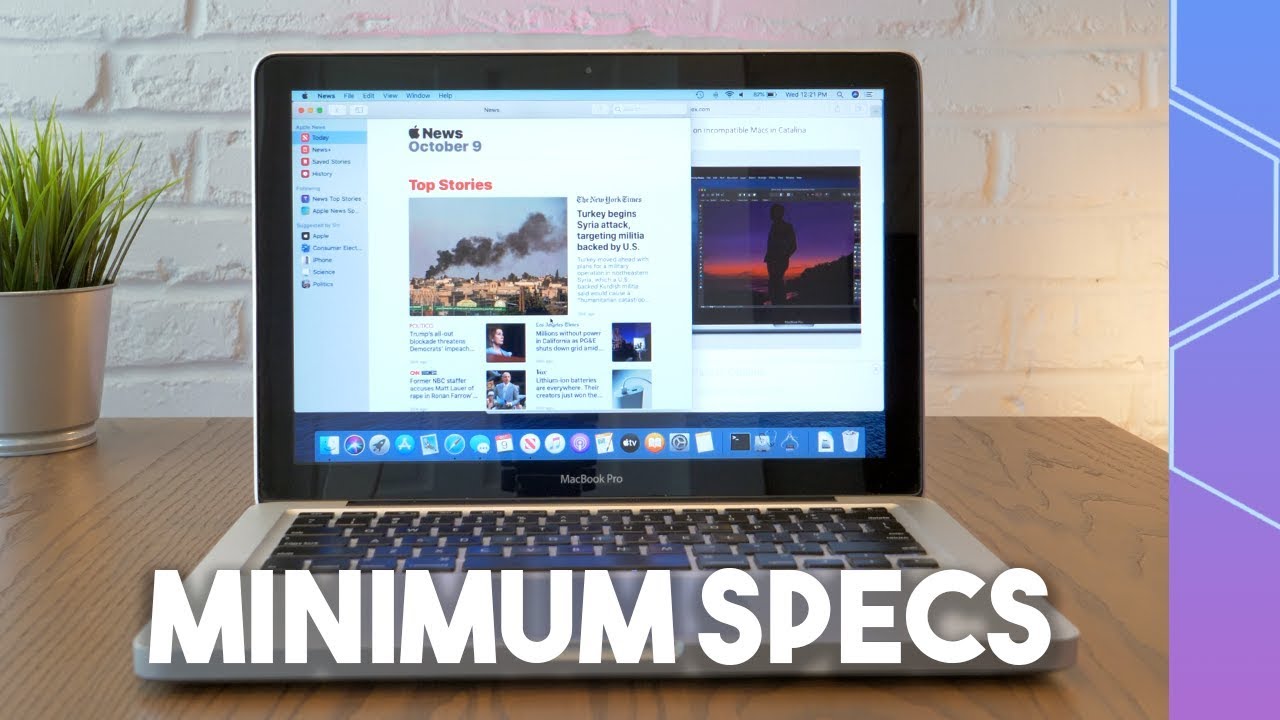
- Get links to related stories or more stories from the same publication at the end of an article
- “Breaking” and “Developing” labels for Top Stories
- Stories from Apple News are now available in Canada in English and French
This update includes the following bug fixes:
Music
- Restores the column browser view for managing the music library
- Resolves an issue that may prevent album artwork from appearing
- Fixes an issue that may reset music equalizer settings during playback
iTunes Remote
- Adds support for using an iPhone or iPad to remotely control the Music and TV apps on a Mac
Photos
- Resolves an issue that may cause some AVI and MP4 files to appear as unsupported
- Fixes an issue that prevents newly created folders from appearing in Albums view
- Addresses an issue where manually sorted images in an album may be printed or exported out of order
- Fixes an issue that prevents the zoom-to-crop tool from working in a print preview
Macos Zoom Audio Issue Asking For Password Windows 7
- Addresses an issue that may cause Mail preferences to open with a blank window
- Resolves an issue that may prevent using undo from retrieving deleted mail
Other
- Improves the reliability of syncing books and audiobooks to your iPad or iPhone through the Finder
- Fixes an issue where reminders may be out of order in the Today smart list in the Reminders app
- Resolves an issue that may cause slow typing performance in the Notes app
Enterprise content
- Fixes an issue where the user password might not be accepted at the login window after upgrading a Mac with an Apple T2 Security Chip to macOS Catalina
- Improves compatibility with video conferencing apps on MacBook Pro models introduced in 2018
- Users logged in as a standard user can now install apps from the App Store
macOS Catalina 10.15.1
The macOS Catalina 10.15.1 update includes updated and additional emoji, support for AirPods Pro, HomeKit Secure Video, HomeKit-enabled routers, and new Siri privacy settings, as well as bug fixes and improvements.
Macos Zoom Audio Issue Asking For Password On Iphone
Emoji
- Over 70 new or updated emoji, including animals, food, activities, new accessibility emoji, gender-neutral emoji, and skin tones selection for couple emoji
AirPods support
- AirPods Pro support
Home app
- HomeKit Secure Video enables you to privately capture, store, and view encrypted video from your security cameras and features people, animal, and vehicle detection
- HomeKit enabled routers let you control how your HomeKit accessories communicate over the internet or in your home
- Adds support for AirPlay 2-enabled speakers in scenes and automations
Siri
- Privacy settings to control whether or not to help improve Siri and Dictation by allowing Apple to store audio of your Siri and Dictation interactions
- Option to delete your Siri and Dictation history from Siri Settings
This update also includes the following bug fixes and improvements:
- Restores the ability to view file names in the All Photos view in Photos
- Restores the ability to filter by favorites, photos, videos, edited, and keywords in Days view in Photos
- Fixes an issue where Messages would only send a single notification when the option to repeat alerts was enabled
- Resolves an issue that caused Contacts to launch to the previously opened contact instead of the contact list
- Adds a two-finger swipe gesture for back navigation in Apple News
- Resolves issues that may occur in the Music app when displaying playlists inside folders and newly added songs in the Songs list
- Improves reliability of migrating iTunes library databases into the Music, Podcasts, and TV apps
- Fixes an issue where downloaded titles were not visible in the Downloads folder in the TV app
Enterprise content
- When using the built-in keyboard with a non-U.S. keyboard layout, passwords with certain characters are no longer rejected at the Mac login window
- When sign in with Apple ID is not allowed by a configuration profile, the Sign In button in System Preferences is now dimmed