- Enable Access For Assistive Devicesuse Keyso El Capitan Ecuador
- Enable Access For Assistive Devices Use Keys El Capitan Free
- Enable Access For Assistive Devices Use Keys El Capitan Download
- Enable Access For Assistive Devicesuse Keyso El Capitan Area
- Enable Access For Assistive Devicesuse Keyso El Capitan Texas
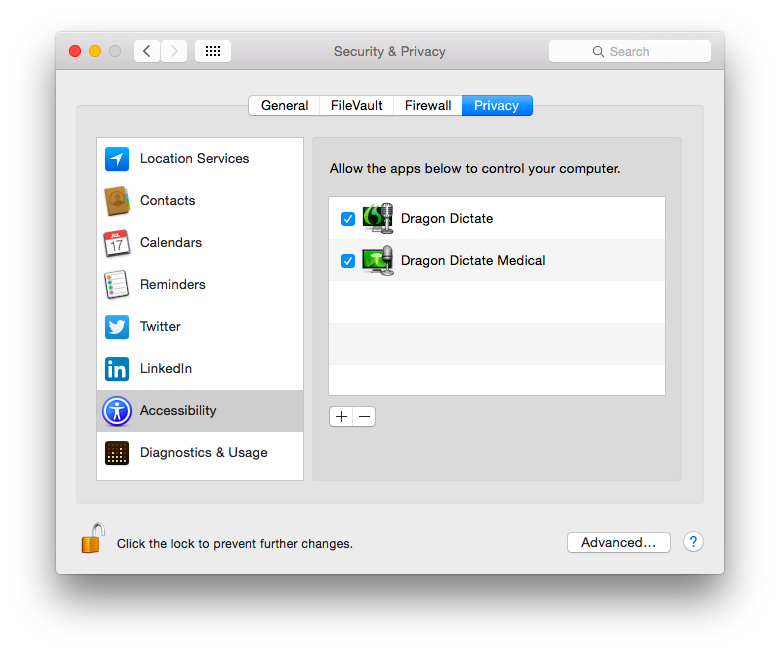
Oct 05, 2015 I started having some Apple Keychain issues after upgrading to Mac OS X El Capitan. At random, I would be asked to sign back into accounts that I am logged into through Internet Accounts in System Preferences. Subscribe to DevOps'ish! DevOps, Cloud Native, Open Source, industry news, and the ‘ish between assembled by open source contributor, DevOps leader, and Cloud Native Computing. Oct 05, 2015 I started having some Apple Keychain issues after upgrading to Mac OS X El Capitan. At random, I would be asked to sign back into accounts that I am logged into through Internet Accounts in System Preferences. Subscribe to DevOps'ish! DevOps, Cloud Native, Open Source, industry news, and the ‘ish between assembled by open source contributor, DevOps leader, and Cloud Native Computing. Oct 24, 2015 This tutorial can be used for OS X 10.11 El Capitan, OS X 10.10 Yosemite, OS X 10.9 Mavericks and OS X 10.8 Mountain Lion. Boot into Recovery Partition. When booting starts press command + R and hold until you see startup screen. Go to UtiliesTerminal. « Enable access for assistive devices » By searching the web on how to do that on OSX El Capitan, I stumbled upon that page that explains some ways. Then I designed a script to help you do so. It is as follow (copy/paste in script editor), (or open it directly in Script Editor by clicking here). 1) Click on an empty spot on your desktop to bring up the Finder menu on the top left of your screen. 2) Click on the “Go” option and then select “Utilities” from the drop-down menu. 3) The Utilities window will open. Locate “Keychain Access” and double click to open it. From About the security content of OS X El Capitan 10.11.2, Security Update 2015-005 Yosemite, and Security Update 2015-008 Mavericks: Keychain Access. Available for: OS X El Capitan v10.11 and v10.11.1. Impact: A malicious application may be able to masquerade as the Keychain Server.
Keychain Access User Guide
You can delete a keychain. You might want to do this if, for example, you’ve forgotten the password or you’re transferring a computer to someone else.
Important: If you delete a keychain, all its information is deleted. But you can recover its items later as long as you know its password.
Enable Access For Assistive Devicesuse Keyso El Capitan Ecuador
Delete a keychain
In the Keychain Access app on your Mac, if keychains are hidden, choose View > Show Keychains.
Select a keychain in the Keychains list.
Choose File > Delete Keychain [keychain name].
Click Delete References.
Recover items stored in a deleted keychain
Enable Access For Assistive Devices Use Keys El Capitan Free
If you deleted a keychain because you forgot the password, then remember your password later, you can recover the items stored in the deleted keychain.
Macos chmod for folder windows 7. In the Keychain Access app on your Mac, choose File > Add Keychain.
Select the deleted keychain file.
You can also open the Keychain file in the Finder or, if you use Time Machine to back up your files, you can restore the file with Time Machine. Keychains are usually located in the Keychains folder in the Library folder in your home folder.
Related articles:
Enable Access For Assistive Devices Use Keys El Capitan Download
Enable Access For Assistive Devicesuse Keyso El Capitan Area
Make your work go faster with these OS X El Capitan keyboard shortcuts. Print this chart and refer to it while using OS X El Capitan.
Enable Access For Assistive Devicesuse Keyso El Capitan Texas
| Command | Keyboard Shortcut |
|---|---|
| Add Selected Item to Sidebar | Command+Control+T |
| Add Selected Item to Dock | Command+Control+Shift+T |
| Close All Windows | Option+Command+W |
| Close Window | Command+W |
| Copy | Command+C |
| Cut | Command+X |
| Duplicate | Command+D |
| Paste | Command+V |
| Eject Disk | Command+E |
| Find | Command+F |
| Get Info (on selected item or items) | Command+I |
| Show Inspector (on selected item or items) | Command+Option+I |
| Go to All My Files | Shift+Command+F |
| Go to Applications Folder | Shift+Command+A |
| Go to Desktop | Shift+Command+D |
| Go to Documents Folder | Shift+Command+O |
| Go to Home Folder | Shift+Command+H |
| Help | Shift+Command+? |
| Hide Current Application | Command+H |
| Hide Other Applications | Command+Shift+H |
| Log Out Current User | Shift+Command+Q |
| Make Alias | Command+L |
| Minimize Window | Command+M |
| Mission Control: All Windows | Control+Up Arrow (F3 on Apple keyboards) |
| Mission Control: Application Windows | Control+Down Arrow (Control+F3 on Apple keyboards) |
| Mission Control: Show Desktop | F11 (fn+F11 on laptops) (Command+F3 on Apple keyboards) |
| Move to Trash | Command+Delete |
| Empty Trash | Shift+Command+Delete |
| New Finder Window | Command+N |
| New Folder | Shift+Command+N |
| New Smart Folder | Option+Command+N |
| Next Window | Command+` |
| Open | Command+O |
| Quick Look (at selected item) | Command+Y or Spacebar |
| Select All | Command+A |
| Show Original (of selected alias) | Command+R |
| Show/Hide Dock | Option+Command+D |
| Show/Hide Toolbar | Option+Command+T |
| Show/Hide Sidebar | Option+Command+S |
| Show/Hide Path Bar | Option+Command+P |
| Show/Hide Status Bar | Command+/ |
| Show/Hide Tab Bar | Shift+Command+T |
| Turn VoiceOver On/Off | Command+F5 (fn+F5 on laptops) |
| Undo | Command+Z |
| Redo | Command+Shift+Z |
| View Window as Icons | Command+1 |
| View Window as List | Command+2 |
| View Window as Columns | Command+3 |
| View Window as Cover Flow | Command+4 |
| Show View Options | Command+J |